|
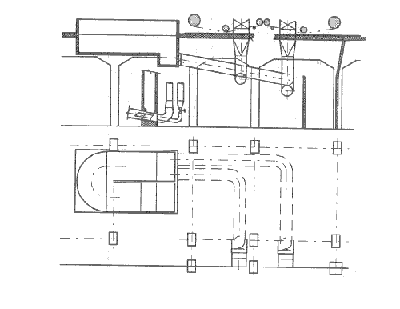
Wet End Audit - Determine if the Wet End
Design meets Standards
The function of the wet end of the paper machine is to:
maintain a stable stock flow to the headbox
ensure thick stock is thoroughly mixed with
the white water
ensure stock entering the headbox is clean
minimize air content of the stock.
The
components of a wet end include the basis weight
control valve, stuff box, wire pit and silo, fan pump,
deaerator, screens and cleaners, associated piping, and the headbox.
Should any of these components not follow the correct design
principles, instability can result with resultant problems with paper
uniformity.
If a paper analysis (TAPIO) determines the basis weight
variations are in the 1 Hz frequency range or lower, rotating machinery
in the mill are not the cause of the problem. Rather the cause is much
more likely a consistency variation in the stock approach system. While the
consistency variation can be measured with a wet end survey, a wet end audit,
focusing on the design of the wet end, can trace the variation to its source. A wet end audit is complimentary to a wet
end survey.
|